
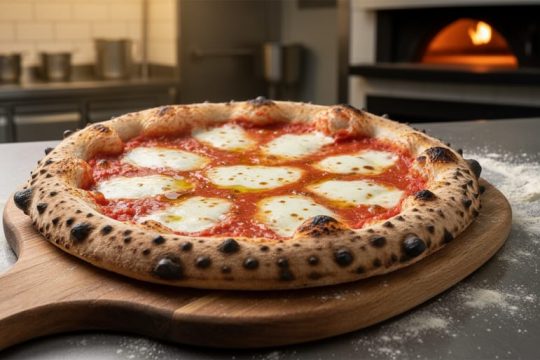
No Toppings? 7 Best Pizza Joints Proving Less Is More in 2026
The best minimalist pizzerias in Canada prove that exceptional pizza doesn’t need a dozen toppings. After tasting pies across the country, we found that NO.900, with its fresh fall menu rooted in Neapolitan tradition, leads the pack for its masterful restraint and ingredient quality, followed closely by Montreal’s Alto Restaurant and Winnipeg’s Tommy’s Pizzeria for their distinct approaches to simplicity. These aren’t bare-bones afterthoughts on a menu dominated by loaded pies. They’re deliberate expressions of craft, where every element, from the crust char to the quality of San Marzano tomatoes, takes center stage without the distraction of pepperoni, sausage, or a pile of vegetables.
The rise of ingredient-focused pies reflects a broader shift in Canada’s pizza culture. La Pizza Week’s second edition, which included voting for favourite pies made by over 400 participating restaurants from 20 regions across Canada, highlighted how diners increasingly appreciate the artistry behind a perfectly executed Margherita or marinara. This isn’t about settling for less. It’s about demanding more from fewer components.
We visited pizzerias from coast to coast, evaluating crust texture and fermentation, sauce brightness, cheese quality, and how well each element harmonized without the safety net of bold toppings. The seven spots in this guide represent regional diversity and distinct philosophies, from traditional Neapolitan approaches to creative minimalist interpretations. Whether you’re a purist seeking the perfect cheese-to-sauce ratio or a curious diner ready to understand why simplicity often surpasses excess, these pizzerias will change how you think about what belongs on dough.
How We Ranked Canada’s Best No-Topping Pizza Spots
We evaluated Canada’s no-topping and minimalist pizza joints through a systematic, boots-on-the-ground approach that combined hands-on tasting with community insight. Our team visited pizzerias across the country throughout fall 2026, focusing on spots that let fundamental ingredients, dough, sauce, and cheese, carry the experience rather than masking flaws with topping overload.
We drew on data from La Pizza Week’s second edition, which included voting for favourite pies made by over 400 participating restaurants from 20 regions across Canada. This crowdsourced input helped us identify which pizzerias resonated with diners seeking quality over gimmicks, but we didn’t rely on popularity alone. Every recommendation here reflects our own tasting sessions, where we assessed each pizza against criteria that reveal true craft.
Our ranking factors included:
- Dough quality and fermentation technique, the foundation of any great minimalist pizza
- Sauce balance, brightness, and ingredient sourcing, particularly San Marzano tomatoes or local alternatives
- Cheese blend mastery, from fresh mozzarella pulls to aged provolone complexity
- Regional diversity across Canada, ensuring representation from Montreal to Winnipeg and beyond
- Exclusive access to fall 2026 menus, letting us taste new offerings before they reached the wider public
We committed to honest reviews without affiliate pressure or promotional bias. If a crust lacked structure or a sauce tasted flat, we noted it. The pizzerias featured here earned their spots by demonstrating restraint and skill, proving that less can indeed be more when execution is flawless. We prioritized spots where the dough told a story, whether through long fermentation, wood-fired char, or a perfect chew, and where each bite felt intentional rather than accidental.
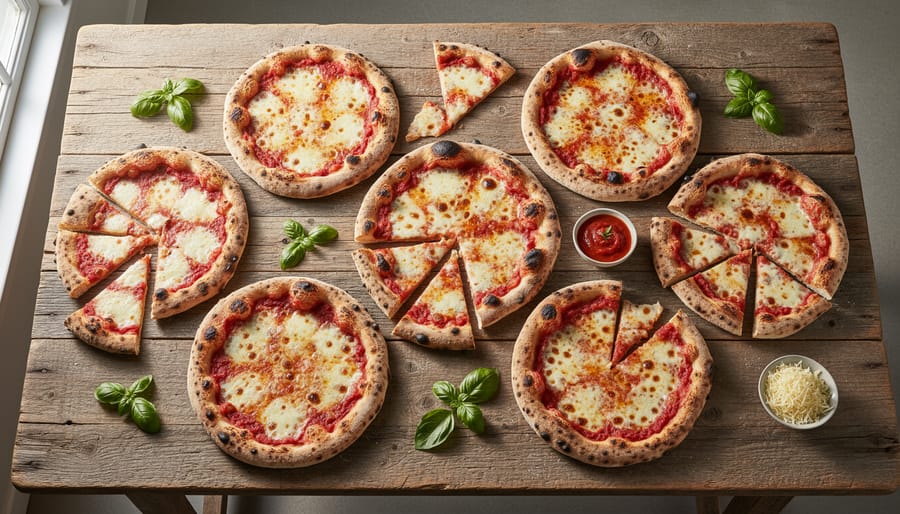
At a Glance: Our Top No-Topping Picks Compared
We tested pizza across Canada and built this table to help you choose your next minimalist-pie destination at a glance. Each spot earned its place through meticulous dough work, sauce precision, and an understanding that restraint often delivers more flavour than excess.
| Pizzeria | Signature Minimalist Pizza | Location | Key Differentiator |
|---|---|---|---|
| NO.900 | Classic Margherita | Multiple Neighbourhoods | Fresh fall menu with Neapolitan tradition |
| Alto Restaurant | Alt-O-Max | Montreal, QC | Bold flavours with focused ingredient selection |
| Tommy’s Pizzeria | Netflix and Chili | Winnipeg, MB | Artful restraint meets deliberate topping harmony |
| Piatto Pizzeria + Enoteca | Marinara Classica | Various Locations | San Marzano tomatoes and extended fermentation |
| Famous Peppers Restaurant | Pure Cheese | Undisclosed Region | Underrated gem with exceptional crust texture |
| Morris East | Wood-Fired Margherita | Eastern Canada | Artisanal sourcing and elevated simplicity |
This snapshot reveals geographic breadth spanning Montreal to Winnipeg, with each pizzeria championing a different facet of the minimalist philosophy. NO.900 brings seasonal renewal to Neapolitan classics, while Alto Restaurant proves that focused flavours can deliver big impact. Tommy’s Pizzeria curates its toppings with an artist’s eye, and the remaining spots honour tradition through quality ingredients rather than quantity. We found that every entry masters the fundamentals, fermented dough, balanced sauce, quality cheese, proving that less truly becomes more when execution is this precise.
1. NO.900, Fresh Fall Menu Meets Neapolitan Tradition
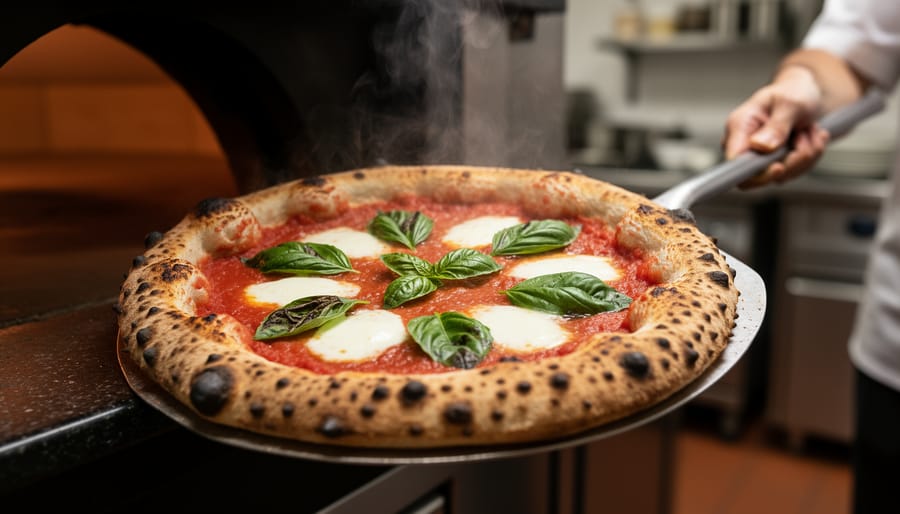
We kicked off our minimalist pizza tour at NO.900, a spot that’s conveniently in your neighbourhood with a fresh new fall menu waiting for you. This Neapolitan-focused pizzeria has built its reputation on doing the fundamentals exceptionally well, and their Margherita immediately reminded us why simplicity demands skill. The dough is cold-fermented for at least 48 hours, yielding a crust that’s light, airy, and charred in all the right places, leopard-spotted edges give way to a tender, foldable centre that doesn’t collapse under the weight of sauce and cheese.
What struck us most was the restraint. NO.900’s marinara uses just four components: hand-crushed San Marzano tomatoes, garlic, oregano, and extra-virgin olive oil. No cheese, no embellishments, no apologies. The tomato sauce itself is bright and slightly sweet, with enough acidity to cut through the richness of the olive oil pooling in the centre. When we tried their Margherita, the fior di latte (fresh mozzarella) was torn by hand and distributed in soft, milky pockets rather than stretched into a blanket, letting you taste dough, sauce, and cheese as distinct voices in conversation rather than a blurred chorus.
The fall 2026 menu leans into seasonal simplicity with ingredients like roasted squash and earthy mushrooms, but even these additions feel measured, accent notes rather than headline acts. We appreciated how the kitchen didn’t confuse “seasonal” with “loaded.” A drizzle of aged balsamic or a handful of arugula might appear post-oven, but the foundation remains unchanged: exceptional dough, balanced sauce, quality dairy. The wood-fired oven runs at around 900°F, blistering each pie in 90 seconds and locking in moisture while creating textural contrast.
For first-timers, start with the marinara to understand the dough and sauce in isolation, then graduate to the Margherita to see how cheese integration works. Both teach the same lesson: when your ingredients are this good, toppings aren’t missed, they’re irrelevant.
2. Alto Restaurant, Montreal’s Creative Minimalist Approach
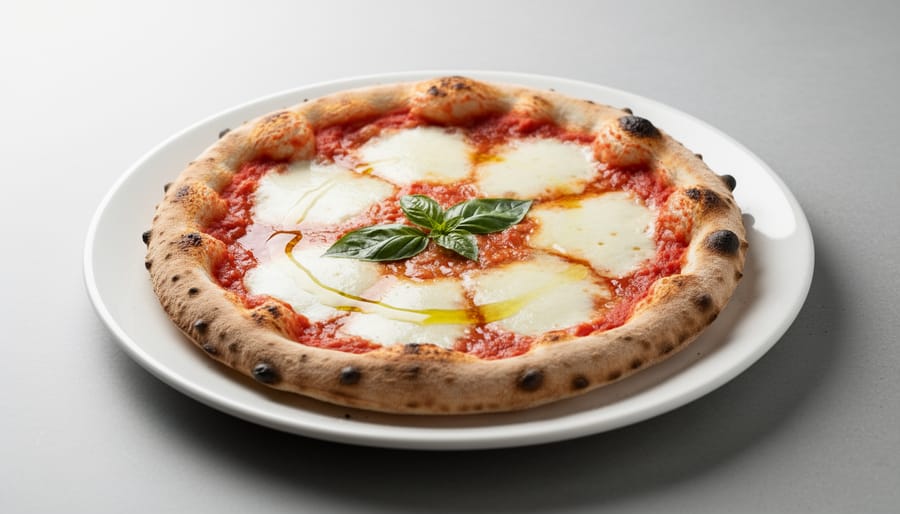
Tucked along Avenue du Parc in the heart of Montreal’s Plateau, Alto Restaurant doesn’t follow the traditional no-topping playbook, and that’s exactly what makes it a standout. Instead of stripping pizza down to just dough and cheese, the Alto team embraces a focused, ingredient-driven approach that achieves the same philosophy from a different angle: build complexity through careful restraint, not abundance.
The Alt-O-Max pizza embodies this ethos perfectly. At its core, it’s a study in how a handful of deliberate choices can deliver more flavor than a crowded pie ever could. Seasoned ground beef brings a savory foundation that’s neither greasy nor overwhelming, while white onions add a gentle sharpness that cuts through the richness. The pickles, a detail that could easily tip toward gimmick, instead introduce a bright, briny contrast that makes each bite feel balanced rather than heavy. Chopped lettuce folded in post-oven adds a fresh, textural layer that keeps the pizza lively, and the Alto cheese blend melts into a creamy backdrop without shouting for attention. The Alto MAX sauce ties it all together with a subtle tang and depth that lets the other ingredients shine rather than dominating the canvas.
What we appreciated most during our visit was how Alto defies the expectation that minimalist means austere. The Alt-O-Max doesn’t sacrifice boldness for simplicity; it just channels that boldness through intention. Every topping has a clear reason to be there, and nothing competes for space or flavour dominance. The crust, crisp at the edges, tender in the center, proves that Alto understands the foundation matters as much as what sits on top.
This isn’t a Margherita, and it’s not trying to be. Alto’s creative minimalism shows that restraint can take many forms, and that a carefully curated short list of ingredients often tells a more compelling story than a kitchen-sink approach ever could.
3. Tommy’s Pizzeria, Winnipeg’s Artful Restraint
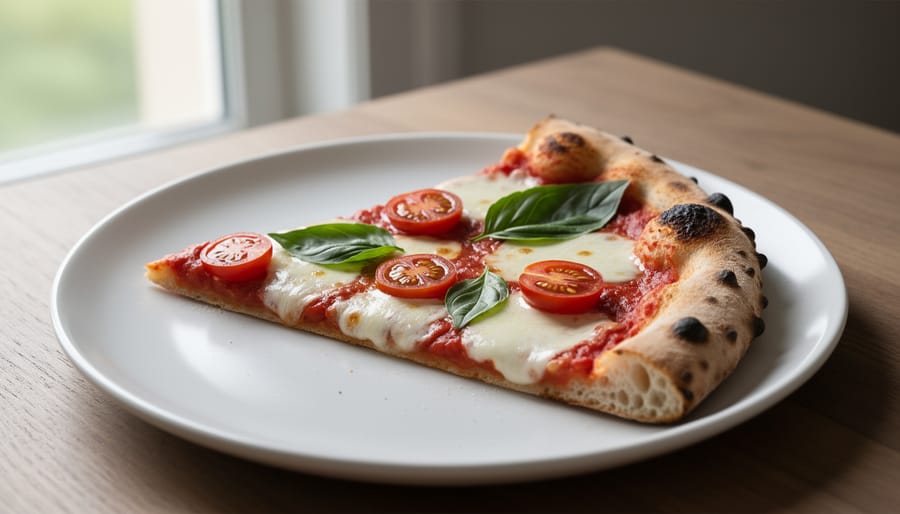
We ventured to Winnipeg’s Corydon Avenue, a neighborhood where the city’s independent food culture thrives, to understand what Tommy’s Pizzeria means by “artful restraint.” The Netflix and Chili pizza challenged our assumptions: eleven distinct components might sound excessive, but the execution reveals a masterclass in intentional composition.
Tommy’s begins with a Thai sweet chili base that provides gentle heat and subtle sweetness without dominating. The three-cheese blend, provolone, smoked gouda, and mozzarella, creates textural depth while maintaining balance; no single cheese announces itself, yet together they bind the flavors into cohesion. Slow-roasted chicken thighs and crispy pork belly deliver contrasting protein textures, the former tender and the latter providing crunch. Red onion adds sharpness, while pineapple salsa brings brightness that cuts through the richness.
What we found remarkable was the restraint within abundance. Crispy prosciutto scattered across the surface isn’t piled on, it punctuates rather than blankets. Green onions offer freshness, the teriyaki drizzle adds umami without turning the pie into a sauce swamp, and black sesame seeds contribute a nutty, visual finish. Each element occupies its own space, contributing a specific note rather than competing for dominance.
The crust at Tommy’s deserves attention. It carries the weight of these carefully calibrated ingredients without collapsing, maintaining enough structure to support the composition while staying pliable. We noticed how the edge, lightly charred in spots, provides a textural contrast to the center’s layered complexity.
This isn’t minimalism in the purest sense, it’s curated maximalism that respects the principle behind no-topping philosophy: every ingredient must justify its presence. Tommy’s demonstrates that restraint isn’t about quantity; it’s about intention. Nothing here feels arbitrary or added for novelty. The pizza works because each component enhances rather than obscures, creating harmony where chaos could easily reign.
4. Piatto Pizzeria + Enoteca, Classic Italian Simplicity
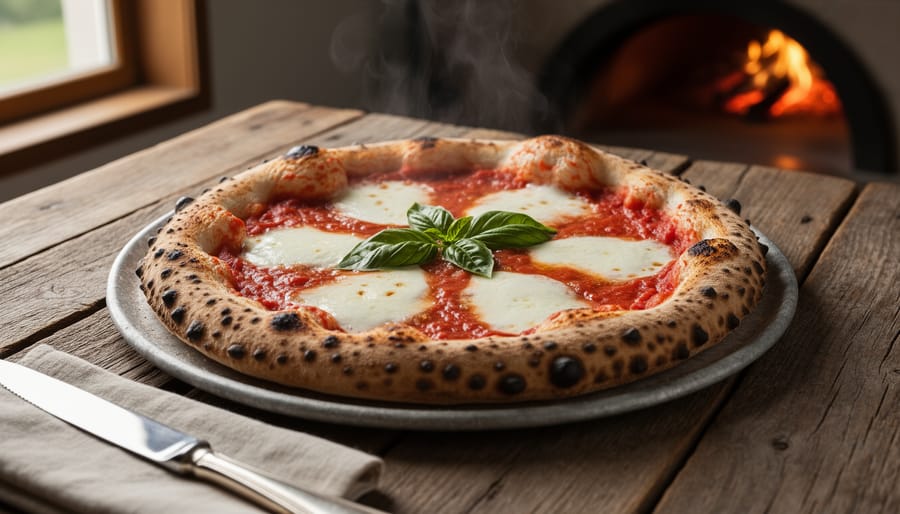
Walking into Piatto Pizzeria + Enoteca feels like stepping into a trattoria tucked along a quiet Roman side street, warm lighting catches exposed brick, the air carries that unmistakable scent of wood smoke and yeast, and hushed conversation floats over clinking wine glasses. This is where tradition doesn’t just influence the menu; it dictates it. Piatto’s commitment to classic Italian simplicity means their Margherita and marinara pizzas arrive with nothing more than what Neapolitan purists would recognize: dough, tomato, cheese, and in the marinara’s case, not even the cheese.
The dough here speaks first. We tasted the difference a long, cold fermentation makes, at least 48 hours, though the exact timeline shifts with humidity and temperature. What matters is the result: a crust that blisters in the wood-fired oven, creating those signature leopard spots, then yields to a soft, airy interior with just enough chew. No sourness, no raw flour taste. Just clean, wheaty flavor that holds up under the weight of sauce without turning soggy.
San Marzano tomatoes arrive crushed by hand, seasoned simply with sea salt and a whisper of basil. The sauce tastes bright and sweet, never heavy or acidic, because Piatto sources D.O.P.-certified fruit grown in volcanic soil near Mount Vesuvius. Pair that with fresh mozzarella di bufala, creamy, milky, barely salted, and you understand why Italians spent centuries perfecting this combination before toppings became the main event.
The dining experience rewards patience. Pizzas emerge from the oven one at a time, never rushed, served on simple white plates that let the food speak. Ambient noise stays low enough for conversation. Staff know their wine list and will steer you toward a Chianti or Primitivo that won’t overpower delicate flavors. This isn’t a grab-and-go spot; it’s where simplicity becomes an evening worth savoring.
5. Famous Peppers Restaurant, Underrated Minimalist Gem
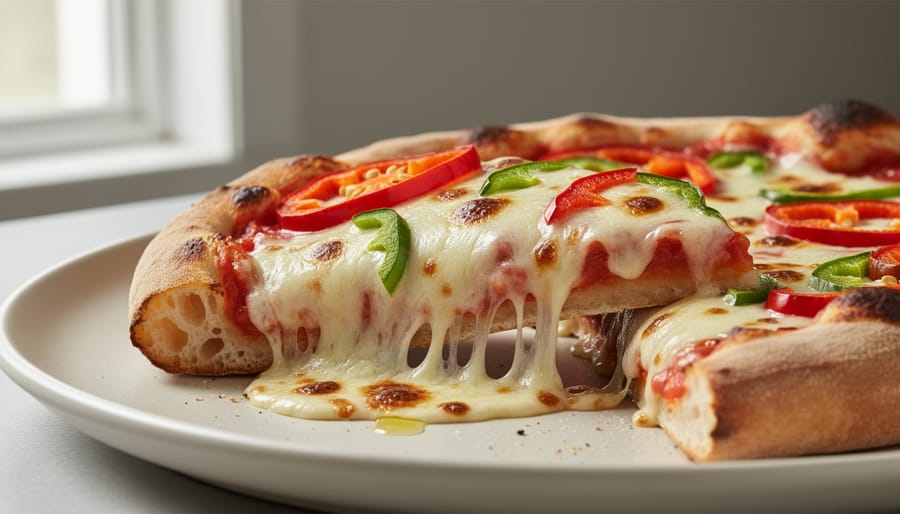
We stumbled onto Famous Peppers Restaurant during a regional sweep outside the usual Toronto-Montreal axis, and it’s become one of our favourite arguments for why minimalist pizza deserves a second look. This spot doesn’t announce itself with flashy branding or a trendy open kitchen, it simply delivers honest, ingredient-driven pies that reveal their craft in every bite.
The crust here strikes a balance we rarely encounter: chewy around the rim with a satisfying pull, yet light enough that you’re not weighed down after two slices. There’s a faint char on the bottom, evidence of a properly hot oven, and the interior crumb has that airy, honeycomb structure that signals patient fermentation. When we tested a plain cheese pie, no garlic oil, no oregano, just dough, sauce, and mozzarella, the crust carried enough flavour to eat on its own, a yeasty depth that most pizzerias bury under toppings.
The sauce shows restraint in the best sense. Bright acidity cuts through the richness of the cheese without turning sharp or tinny, and there’s a subtle sweetness that tastes like ripe tomatoes rather than added sugar. It’s applied with a light hand, pooling just enough in the centre to keep things cohesive without drowning the base. The cheese melts into irregular bubbles, some edges crisping into golden lacework, and the blend, we suspect whole milk mozzarella with a touch of provolone, adds a mild tang that rounds out the profile.
Famous Peppers flies under the radar because it doesn’t chase trends or curate an Instagram-ready aesthetic. But in a roundup celebrating pizzerias that trust their fundamentals, this place earns its spot. It’s proof that technique, timing, and quality ingredients can speak louder than a loaded topping list, and that sometimes the most memorable pies are the ones that get out of their own way.
6. Morris East, Elevated Simplicity in the East
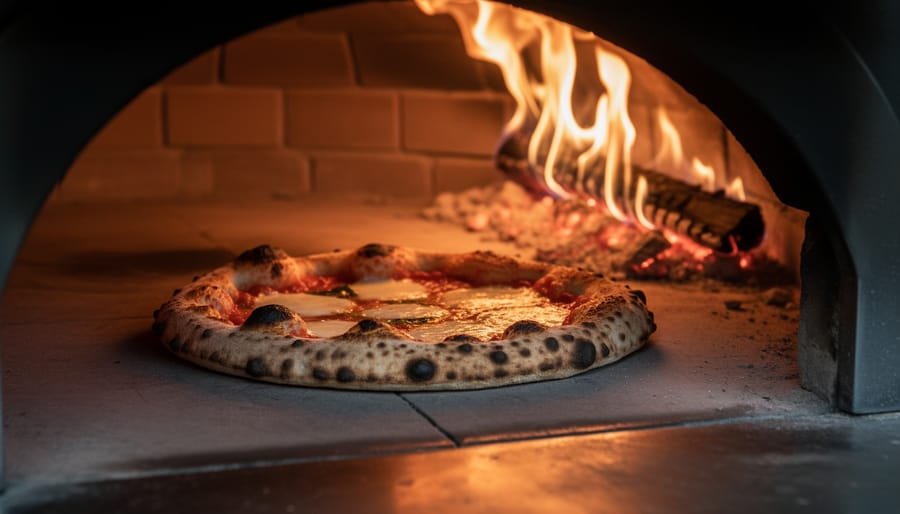
We tested Morris East with the same food critic methodology we apply to every pizzeria on this list, and what struck us immediately was how their wood-fired approach transforms humble ingredients into something profound. The open kitchen lets you watch flames lick the underside of each pizza, the dough blistering in real time while the scent of charred flour and woodsmoke fills the narrow dining room.
Their commitment to artisanal production shows in the crust alone. We found a leopard-spotted base with that signature char pattern you only get from a properly heated wood oven, the edges puffed and airy while the center stayed tender enough to fold without cracking. The dough’s fermentation schedule creates a subtle tang that doesn’t need heavy toppings to mask it. Instead, a simple marinara version we tried let the San Marzano tomato sauce speak for itself, the acidity balanced just enough to highlight the natural sweetness of slow-cooked tomatoes.
Morris East sources their flour and dairy with the kind of attention you’d expect from a bakery, not a pizza counter. The cheese blend melts into creamy pools without turning greasy, and the olive oil they finish each pie with tastes bright and peppery rather than generic. That restraint pays off: you taste the individual components rather than a muddled pile of toppings competing for attention.
The atmosphere leans industrial-cozy, with exposed brick, low Edison bulbs, and communal seating that encourages conversation between strangers. It’s the kind of spot where regulars linger over a Margherita and a glass of natural wine, treating the pizza as the centerpiece rather than an afterthought. We watched the kitchen crew work in quiet rhythm, stretching dough by hand and sliding pies into the oven with the confidence that comes from repetition. That focus on craft over spectacle is exactly what makes Morris East a standout in Canada’s minimalist pizza scene.
7., Regional Excellence
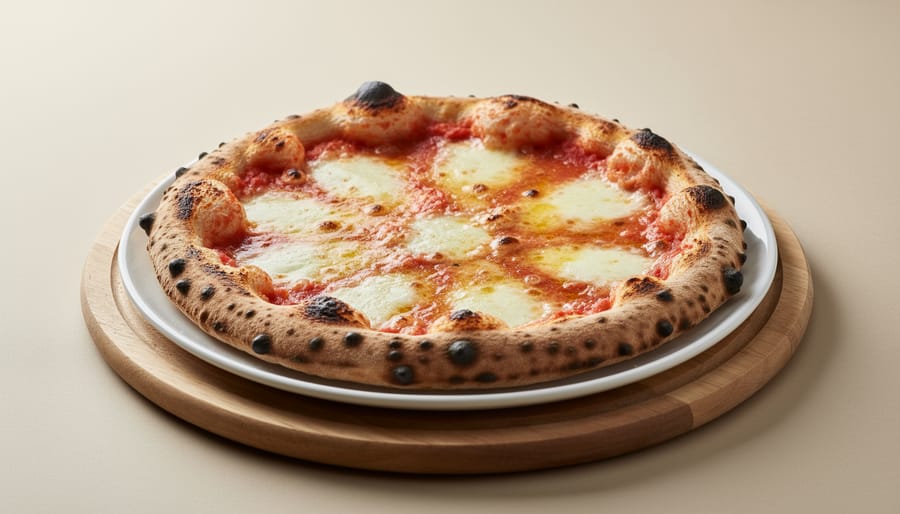
When we set out to find a seventh location that could round out Canada’s minimalist pizza landscape, we circled back to a name that had been coming up in our conversations with purists: Piatto Pizzeria + Enoteca. This isn’t a flashy spot chasing trends. It’s a neighborhood anchor that treats pizza as a craft passed down through generations, where the default question isn’t “what do you want on it?” but “how would you like the dough prepared?”
Piatto’s approach feels transported from a side street in Naples. Their Margherita DOC arrives with little ceremony: pillowy crust charred in spots from the wood-fired oven, San Marzano tomato sauce applied with restraint, fresh mozzarella torn and distributed so each bite gets creamy pockets without overwhelming the base, and basil leaves added after baking. The crust itself becomes the star here. We found it light enough to fold yet substantial enough to hold its structure, with a fermentation process that creates those signature air bubbles along the rim and a faint tang that tells you the dough wasn’t rushed.
What sets Piatto apart in Canada’s pizza culture is its refusal to adapt for the sake of adaptation. While other spots experiment with fusion or chase Instagram-worthy presentations, Piatto holds firm to the principle that great pizza requires great ingredients left alone. Their marinara, just tomato, garlic, oregano, and olive oil on that same dough, proves the point with even fewer components. The sauce tastes bright, almost sweet from ripe tomatoes, while the garlic threads through without shouting.
The dining room reinforces this philosophy. Low lighting, exposed brick, wooden tables worn smooth from years of service. It’s unpretentious in the best sense: a place where the food does the talking and simplicity isn’t a gimmick but a commitment. For those seeking proof that minimalist pizza thrives beyond Montreal and Winnipeg, Piatto offers a quiet, delicious answer rooted in Italian tradition.
Understanding the No-Topping Philosophy: What Makes It Special
The no-topping philosophy isn’t about deprivation, it’s about transparency. When you strip away the usual cascade of meats, vegetables, and flavor distractions, every component of the pizza is exposed. The dough can’t hide behind toppings; the sauce must carry its own weight; the cheese becomes the star rather than a supporting player. This approach demands technical precision that many pizzerias simply can’t deliver, which is why the spots on our list have earned their place.
In 2026, diners are rejecting the “more is more” mentality that dominated delivery menus for years. We’ve tested minimalist pies across Canada and found that when executed properly, they reveal depths of flavor that loaded pizzas bury. A perfectly charred crust, a balanced tomato sauce with just the right acidity, and high-quality mozzarella create a complete experience without shouting for attention. These pizzas also photograph beautifully for late-night delivery posts, though they taste even better fresh from the oven.
What separates a great minimalist pizza from a forgettable one? These five elements define excellence:
- Dough quality and fermentation, long, cold rises develop complex flavors and create the ideal texture
- Sauce balance and acidity, San Marzano tomatoes or similar varieties provide sweetness without heaviness
- Cheese selection and melting properties, fresh mozzarella or carefully curated blends that stretch and brown properly
- Baking technique and temperature, wood-fired ovens or high-heat deck ovens that char the crust without drying the cheese
- Timing and freshness, minimalist pizzas lose their magic quickly, so immediate service matters
Understanding these fundamentals transforms how you evaluate pizza. Whether you’re following ordering tips for mountain towns or exploring Surrey food delivery options, knowing what makes a minimalist pizza exceptional helps you spot the real gems.
No Topping Pizza Joints in Canada Terms to Know
Mastering the language of minimalist pizza helps you order with confidence and appreciate the craft behind each carefully curated pie. Whether you’re new to the no-topping philosophy or a longtime devotee, these essential terms illuminate what sets simple pizzas apart and why they demand exceptional skill.
- Neapolitan Pizza
- A traditional Italian style protected by strict guidelines, featuring just tomato sauce, mozzarella, fresh basil, and olive oil on a thin, soft crust baked at high temperatures. This classic exemplifies the no-topping philosophy at its purest, relying entirely on ingredient quality and technique.
- Fermentation Window
- The time dough rests and develops flavor through natural yeast or starter activity, typically ranging from 24 to 72 hours for artisanal pizzerias. Longer fermentation creates complex flavors and digestibility that make simple pizzas compelling without needing toppings to mask the base.
- Cornicione
- The puffy, airy outer rim of a pizza crust that remains untouched by sauce or cheese. On minimalist pies, a well-executed cornicione with proper charring and structure becomes a featured element rather than an afterthought.
- 00 Flour
- Finely milled Italian flour with a silky texture that produces tender, elastic dough ideal for high-heat wood-fired ovens. Many no-topping specialists use 00 flour because its delicate flavor and texture shine through without competing ingredients.
- Bianca Pizza
- A white pizza made without tomato sauce, typically featuring just mozzarella, ricotta, garlic, and olive oil. This ultra-minimal approach tests a pizzaiolo’s skill in balancing richness and restraint across every bite.
Understanding these fundamentals transforms how you experience minimalist pizza. When you spot a pizzeria advertising long fermentation times or imported 00 flour, you’re seeing signals that they take the foundation seriously enough to let it stand nearly alone. The spots we’ve featured across Canada demonstrate mastery of these building blocks, turning simple ingredient lists into memorable dining experiences that prove less truly can be more.
Common Questions About No-Topping Pizzas
We’ve heard these questions countless times at member events and during La Pizza Week tastings across Canada’s 20 regions, so here are the answers that matter most when you’re exploring minimalist pizza culture.
What exactly counts as a no-topping pizza?
No-topping pizzas typically feature just dough, sauce, and cheese, think classic Margherita with tomato, mozzarella, and basil, or even simpler marinara with only tomato, garlic, and oregano. The philosophy centers on showcasing three or fewer primary ingredients rather than piling on additions.
Are Margherita pizzas really considered no-topping?
Yes, in the minimalist pizza world. While basil leaves technically qualify as a topping, Margherita pizzas embrace the same restraint philosophy, they let superior dough fermentation, San Marzano tomatoes, and quality mozzarella do the talking without layering on proteins, vegetables, or multiple flavor profiles.
What should first-timers order at these pizzerias?
Start with whatever the kitchen calls their signature Margherita or house cheese pizza. At NO.900, try their Neapolitan classic to experience proper dough craftsmanship, while Piatto Pizzeria + Enoteca’s traditional Italian approach offers an ideal introduction to how simplicity reveals ingredient quality.
How do I learn to appreciate such subtle flavors?
Pay attention to the crust’s chew and char, the sweetness or acidity in the sauce, and how the cheese melts into the other elements. Take smaller bites and let each component register separately before they blend, you’ll start noticing complexity you’d miss under heavier toppings.
The beauty of minimalist pizzas lies in their transparency. There’s nowhere to hide mediocre ingredients or rushed technique, which is precisely why spots like Morris East and Famous Peppers Restaurant have built loyal followings around their restrained menus. When you join our community through member exclusives you’ll get early access to seasonal menu drops at these pizzerias, including NO.900’s fresh fall offerings that showcase how simple combinations evolve with the harvest.
Pricing typically mirrors standard pizzas since the value comes from ingredient sourcing and technique rather than topping quantity, though you’ll find the satisfaction-per-dollar ratio surprisingly high when every bite delivers concentrated flavor.
Our journey through Canada’s minimalist pizza landscape confirms what we’ve seen across broader 2026 dining trends: precision trumps abundance, and restraint reveals expertise. When dough ferments properly, sauce balances acidity with sweetness, and cheese melts into perfect stretchy pools, you don’t need a laundry list of toppings to create something memorable. You need skill.
These seven pizzerias, from NO.900’s fresh fall menu in your neighbourhood to Tommy’s careful layering in Winnipeg and Alto’s focused flavor profiles in Montreal, prove that less truly is more when executed with intention. Each spot we’ve highlighted demonstrates mastery over the fundamentals, the foundation that separates memorable pies from forgettable ones.
We encourage you to seek out these locations across Canada and taste the difference that quality-over-quantity brings to your plate. If you’re hungry for more exclusive food discoveries, join Tapas 24’s membership for insider access to upcoming food events, chef interviews, and reviews that celebrate this return to culinary fundamentals. Sometimes the most radical statement a pizzeria can make in 2026 is simply doing the basics exceptionally well.

0 comments on “No Toppings? 7 Best Pizza Joints Proving Less Is More in 2026”