
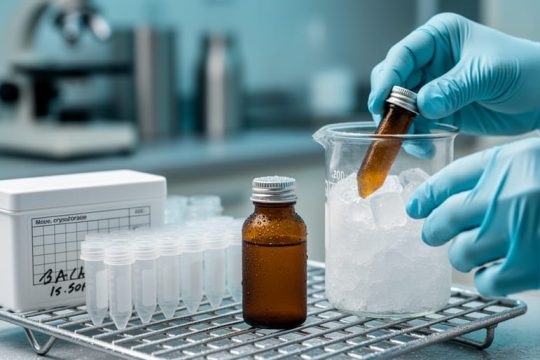
7 Laboratory Habits for Storing KPV Powder and Solutions
Store lyophilized KPV cold, dry and dark, bring the vial to room temperature before you open it, and treat anything you’ve reconstituted as short-lived. Get those three habits right and you’ve protected most of what matters. Get them wrong, and a KPV peptide for research that cost real money turns into a vial of guesswork.
Think of KPV the way a pastry chef thinks of fresh butter. Handled with care, it behaves exactly as expected. Left on the counter, it quietly changes. Whether you’re working with KPV or a similar compound, the same small disciplines separate clean, repeatable results from frustrating ones.
We built this list around the full lifecycle, from the sealed vial in the freezer to the labeled aliquot in the rack. Seven habits, each one practical, quick to scan and easy to fold into a routine you already have.
One boundary, stated plainly: this guide is for laboratory research only, with no dosing and no human-use advice. Your supplier’s data sheet and your institution’s protocols always come first. Where they differ from anything here, follow them.
How These Seven Habits Were Chosen
Think of this list as a chef’s mise en place for a delicate ingredient: each habit earns its spot because it protects against the three things that most often spoil a peptide. Those are moisture, temperature swings and repeated handling. Every habit below targets at least one of them, and none requires fancy equipment, so they suit any well-run small lab.
We also kept the list neutral. Nothing here is a brand endorsement or a sales pitch, just practical guidance you can adapt to your own bench.
One honest caveat: exact storage durations vary by supplier and formulation, so no general article can give you a number you should trust over the paperwork that arrived with your vial. Your first stop should always be the supplier’s certificate of analysis and the product data sheet, followed by your institution’s lab safety policies. When this article and those documents disagree, they win.
With that foundation in place, let’s start with the habit that matters most: how unopened powder should be kept.
1. Keep Lyophilized KPV Powder Cold, Dry and Dark
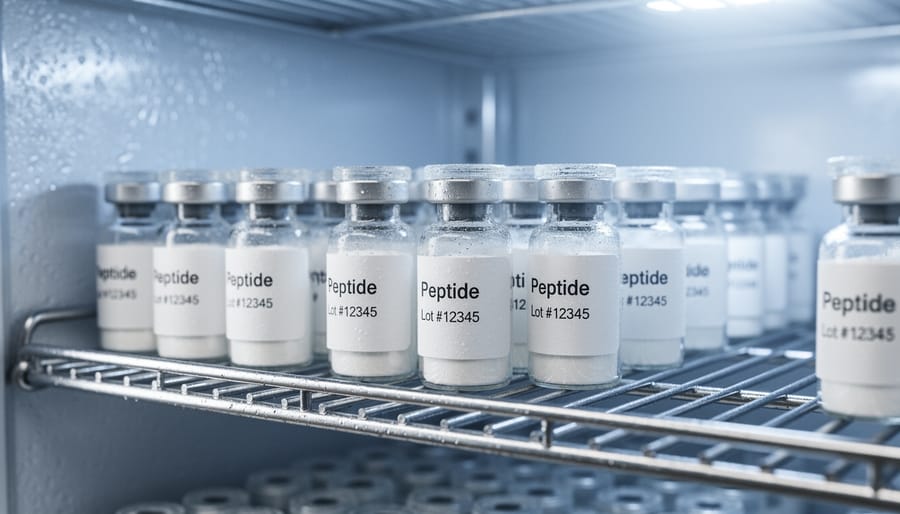
Think of how a good cook treats saffron or dried spices: tucked into a dark cupboard, far from steam and sunlight, lid on tight. Lyophilized KPV powder asks for much the same respect. Freeze-dried peptide is stable when it stays cold, dry and shielded from light, and it loses character quickly when it doesn’t.
For unopened vials, start with the supplier’s certificate of analysis and product data sheet. That is where you’ll learn whether the vial belongs in the freezer or the refrigerator, and it’s the first place to look when you choose storage conditions for a new shipment. Keep the vial in its original packaging, sealed, until you’re ready to work with it. That packaging is there for a reason, and it adds a layer of protection against light and stray moisture.
Here’s a quick checklist for unopened powder:
- A cool, stable temperature, with no swings from a busy door or a defrost cycle.
- Low humidity, with the vial sealed and the cap fully tightened.
- No light exposure, so keep it in its box or an opaque secondary container.
- Stored upright, so the powder stays settled at the bottom of the vial.
- Clearly labeled with the date it arrived in your lab.
Get these basics right and you’ve covered the most important habit before a vial is ever opened.
2. Let Vials Reach Room Temperature Before Opening
Think of a bottle of wine pulled straight from a cold cellar. Within minutes, beads of water bloom across the glass. The same thing happens when a chilled vial of KPV powder meets warm lab air, except the condensation can form on the vial’s surfaces and, if you open it too soon, drift right into the powder itself.
That’s the quiet problem. Lyophilized powder is freeze-dried, which means it’s very good at grabbing moisture from its surroundings. Even a tiny amount of water can slowly change the quality of the material, and you won’t see it happen.
The fix costs nothing but patience. Take the sealed vial out of cold storage and let it sit on the bench, unopened, until it reaches room temperature. Many labs allow fifteen to thirty minutes, though your supplier’s data sheet or your institution’s protocol may suggest a different window, so follow whichever applies to you.
A few simple cues help:
– Wait until the outside of the vial looks completely dry and feels neutral to the touch.
– Wipe away any droplets on the exterior before opening.
– Keep the vial sealed the whole time, so only dry air stays in contact with the powder.
Skipping this step is a bit like cracking open a cold jar of spices over a steaming pot. A short wait protects everything inside.
3. Reconstitute with Care and Clean Technique
Reconstitution is the moment a stable, dry powder becomes a delicate solution, so it deserves the same calm focus a pastry chef gives a tempering step. Begin by reading the protocol document or the supplier’s data sheet. They name the exact diluent to use, and this is no place to improvise or swap in whatever happens to be on the shelf.
Next, prepare the space. Wipe down your work surface, gather everything you need within arm’s reach, and use sterile technique throughout: clean gloves, sterile syringes or pipette tips, and a disinfected vial stopper. Clutter and rushing invite contamination, much as a messy station invites mistakes in a busy kitchen.
Once the vial has come to room temperature, add the diluent slowly, letting it run down the inside wall of the vial rather than hitting the powder directly. A gentle stream protects the peptide from unnecessary stress, the way a slow pour keeps a delicate sauce from splitting. Then swirl the vial softly or roll it between your fingers until the powder dissolves. Resist the urge to shake it hard. Vigorous shaking creates foam and can damage fragile peptide structures, so patience pays off here.
Take a moment to look at the finished solution. It should be clear, free of visible particles and without any odd color. If something looks off, set it aside and consult your supplier or institutional guidelines rather than pressing on.
4. Aliquot Solutions to Avoid Repeated Freeze-Thaw Cycles
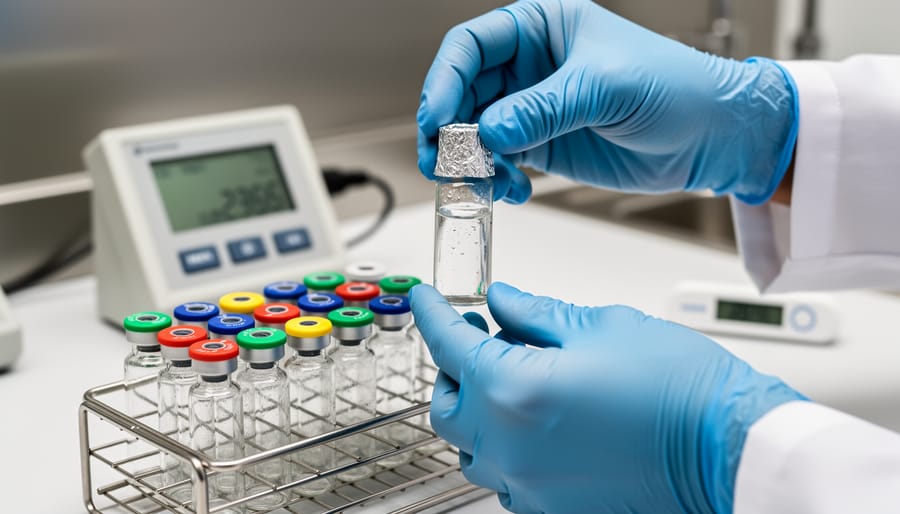
Think of a rich veal stock. Nobody simmers a big batch, freezes the whole pot, then chips off a spoonful each week and refreezes the rest. Cooks portion it into small containers first, so each one thaws once and gets used. The same logic applies to a prepared KPV solution.
Aliquoting means dividing the solution into small, single-use portions soon after reconstitution. Each time a peptide solution warms and cools, it faces stress, and every time someone opens the main vial, there’s another chance for contamination. Single-use portions limit both problems. You pull out one aliquot, use it, and leave the rest undisturbed.
Choose containers with care. Peptides can cling to ordinary plastic surfaces, so many labs prefer low-binding microcentrifuge tubes, and your supplier or protocol may name a specific type. Pick sizes that match your intended working volume, so there’s little leftover to tempt anyone into refreezing.
Label each portion right away with its contents, concentration, preparation date and your initials. It takes seconds, and it saves guesswork later. Always follow your supplier’s data sheet and institutional protocol for storage temperature and timing.
5. Treat Reconstituted Solutions as Short-Lived
Once KPV is dissolved, the clock starts ticking much faster. Where lyophilized powder can sit quietly in a freezer, a reconstituted solution is more like fresh-squeezed juice: lovely at its best, but not something you leave out for weeks. Water gives microbes a place to grow and gives the peptide a place to slowly break down.
Most labs keep prepared solutions refrigerated and use them promptly. How long “promptly” actually means depends on your supplier’s data sheet and your institution’s protocol, so treat those documents as the final word rather than any general rule of thumb. A simple habit that helps is to label and date every container the moment it’s prepared, so you never have to guess its age.
Before each use, give the solution a quick look in good light. Fresh KPV solution should look clear and uniform. Cloudiness, floating particles or any shift in color are signs that something has changed.
If you see any of those, or simply can’t remember when a vial was made, the sensible move is to discard it. Think of it the way a careful cook treats a questionable stock: replacing it costs far less than compromising a whole experiment. When in doubt, throw it out.
6. Label, Date and Log Everything
Walk into any well-run kitchen and you’ll spot masking tape on every container: the stock, the vinaigrette, the prepped shallots, each marked with a name and a date. Nobody argues about it, because without those labels the whole line grinds to a guess. A peptide lab runs on the same discipline, and it matters even more when the contents are clear, colorless and look identical from one vial to the next.
Every vial, tube and aliquot should carry enough information that a colleague could pick it up cold and know exactly what it is. A good label includes:
- Compound name (KPV)
- Concentration
- Diluent used
- Preparation date
- Expiry or discard-by date
- Preparer’s initials
Pair the labels with a simple inventory log, whether a shared spreadsheet or a bound notebook. Record when each vial arrived, when it was opened, how many aliquots it produced and where they sit in the freezer. Handwriting can smudge in cold, damp storage, so use solvent-resistant markers or printed labels. The payoff is traceability: if a result looks odd, the log tells you which batch, which day and whose hands. That small habit keeps a lab as dependable as a good kitchen.
7. Use Quality Containers and a Dependable Cold Chain
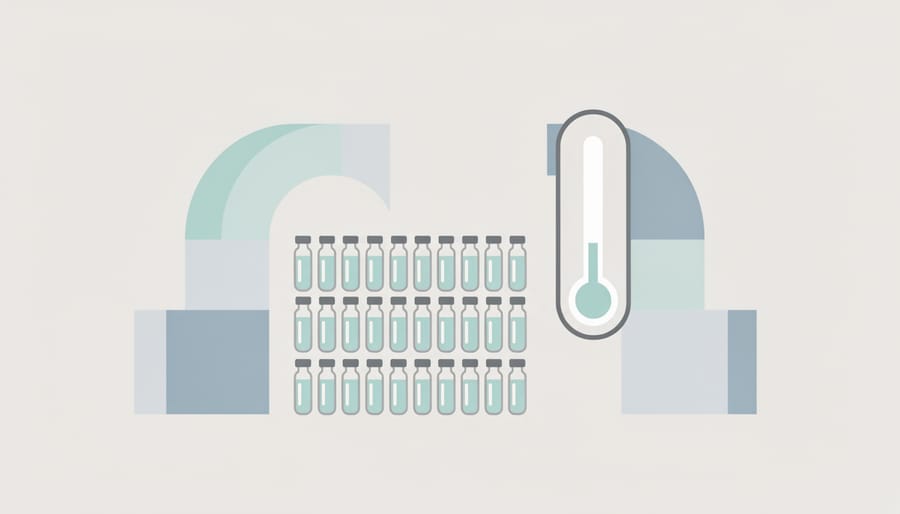
Even the best technique falls apart if the gear around it lets you down. Think of a restaurant walk-in: the ingredients are only as good as the cooler they sit in.
Start with the containers. Use vials and tubes that seal tightly, because a loose cap invites moisture in and lets solution slip out. For prepared solutions, low-binding tubes are worth the small extra cost, since peptides can cling to ordinary plastic and quietly drift away from your intended concentration.
Next, the cold storage itself. Choose a freezer or refrigerator with a thermometer you actually check, ideally one that logs temperatures so you can spot overnight drift. Where possible, steer clear of frost-free units. Their automatic defrost cycles warm the interior briefly and repeatedly, which is the same freeze-thaw stress you worked to avoid by aliquoting.
Placement matters too. Skip the door shelves. Every opening exposes them to a rush of warm air, so they swing in temperature far more than the back of a shelf does.
Finally, protect the cold chain during transport and handoffs. Move vials in insulated packaging with appropriate coolant, keep the trip short, and put them straight back into proper storage on arrival. Always confirm specific temperature requirements against your supplier’s data sheet and institutional protocols.
Common Questions About Storing KPV in the Lab
Readers tend to ask the same handful of things once the habits above are in place. These answers stay general on purpose, because your supplier’s documentation always has the final word.
How long does lyophilized KPV powder last?
Properly sealed and stored cold, dry and dark, unopened powder generally keeps far longer than any solution. The exact shelf life depends on the supplier and formulation, so check the certificate of analysis and product data sheet.
Can I refreeze KPV after reconstituting it?
Repeated freeze-thaw cycles are best avoided, which is why dividing a solution into single-use aliquots up front works so well. Follow your supplier’s or institution’s protocol on whether any refreezing is acceptable.
What should I do if a solution looks cloudy?
Cloudiness, visible particles or a color change are signs to stop and take a closer look. When in doubt, discard it and prepare a fresh batch, and note the observation in your log.
Is room-temperature shipping a concern?
Lyophilized powder is typically more forgiving in transit than a prepared solution, but practices vary. Confirm the supplier’s shipping and receiving guidance, and store the vial correctly as soon as it arrives.
For the most authoritative storage instructions, start with the supplier’s certificate of analysis and product data sheet, then your institution’s lab safety policies. Those documents outrank any general article, this one included. And if you’re curious about the side of Tapas 24 that usually lives closer to the table, our look at member exclusives and a roundup of membership benefits make a tasty change of pace.
Great results, in the lab as in the kitchen, come from respecting your ingredients through consistent, careful handling. A delicate saffron thread and a vial of KPV powder have more in common than you’d think: both reward patience, protection from moisture and a steady hand. Keep the powder cold, dry and dark, treat any solution as short-lived and handle it gently, and always defer to your supplier’s data sheet and your institution’s protocols over any general advice.
If you’ve enjoyed this detour from our usual dining coverage, we’d love to have you back at the table. Explore Tapas 24’s membership for insider access to Toronto’s best restaurants, honest reviews and the global food stories we can’t resist telling.

0 comments on “7 Laboratory Habits for Storing KPV Powder and Solutions”